Summer is here. The kids are at the pool, you’re walking barefoot around the backyard, and family vacations are in full swing. It’s the season of flip-flops, beaches, locker rooms, and splash pads.
Unfortunately, it’s also the season when many people develop an unexpected foot problem: plantar warts.
If you’ve noticed a small, rough spot on the bottom of your foot that’s painful when you walk, you may be wondering what caused it, whether it’s contagious, and most importantly, how to get rid of it.
At Pure Podiatry of WNY, we help patients throughout Western New York diagnose and treat plantar warts every year. The good news is that plantar warts are very treatable, especially when addressed early.
Let’s take a closer look at what causes plantar warts, who’s most at risk, and what you can do to prevent them.
- What Are Plantar Warts?
- What Causes Plantar Warts?
- Why Summer Is Plantar Wart Season
- Are Plantar Warts Contagious?
- Should You Treat a Plantar Wart at Home?
- How a Podiatrist Can Help
- When Should You See a Podiatrist?
- Preventing Plantar Warts
- Don’t Let a Small Wart Become a Big Problem
- Schedule Your Appointment Today
What Are Plantar Warts?
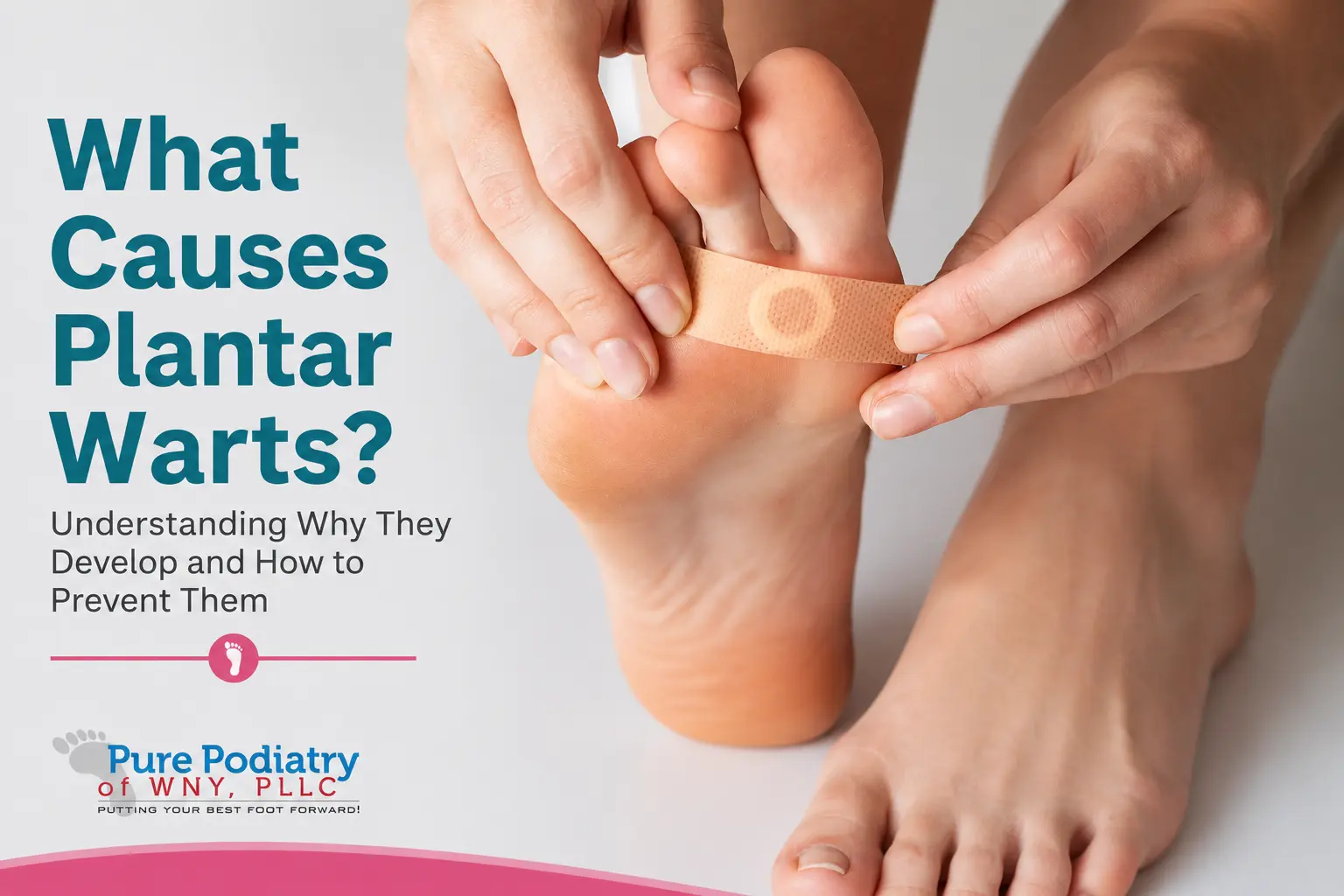
Plantar warts are small growths that develop on the bottom of the foot. They are caused by an infection with the human papillomavirus (HPV), a virus that enters the skin through tiny cuts or breaks.
Unlike warts that develop on your hands, plantar warts often grow inward because of the pressure created by standing and walking. This inward growth can make them painful, especially when they’re located on weight-bearing areas like the heel or the ball of the foot.
Many patients mistake plantar warts for corns or calluses because they often appear as thickened areas of skin.
Common signs include:
- Rough, grainy skin on the bottom of the foot
- Tiny black dots within the wart (these are small clotted blood vessels)
- Pain when standing or walking
- A feeling like you’re stepping on a pebble
- Skin that interrupts the normal lines and patterns of your foot
What Causes Plantar Warts?
The simple answer is HPV, but there’s more to the story.
The virus itself is actually very common. In fact, many people come into contact with HPV without ever developing a wart.
The difference often comes down to opportunity.
When the virus finds a small opening in the skin and your immune system doesn’t eliminate it quickly, a plantar wart can begin to develop.
Several factors increase your risk.
Walking Barefoot in Public Areas
One of the biggest causes of plantar warts is walking barefoot in warm, damp environments where the virus thrives.
These include:
- Public swimming pools
- Locker rooms
- Gym showers
- Water parks
- Community recreation centers
- Hotel pools
- Camp shower facilities
Summer creates the perfect conditions because more people are barefoot more often.
Small Cuts or Cracks in the Skin
HPV cannot usually penetrate healthy, intact skin.
Tiny cuts, blisters, dry skin, or cracked heels create an easy entry point for the virus.
Even something as simple as shaving calluses, wearing shoes that rub, or dry summer skin can increase your risk.
Weakened Immune Response
Some people are simply more likely to develop plantar warts than others.
Children and teenagers tend to get them more often because their immune systems haven’t yet built resistance to many strains of HPV.
Adults with weakened immune systems may also be at higher risk.
Sweaty Feet
Moisture softens the skin, making it easier for the virus to enter.
People who wear athletic shoes for long periods, participate in sports, or naturally have sweaty feet may have a greater chance of developing plantar warts.
Direct Contact
Although less common, plantar warts can spread through direct contact with an infected person or by touching contaminated surfaces.
This is why sharing shoes, socks, towels, or foot care tools is never recommended.
Why Summer Is Plantar Wart Season
Every summer, we see an increase in patients coming in with plantar warts.
Why?
Because almost every risk factor increases during the warmer months.
Children spend hours at pools.
Families visit water parks.
Athletes are in locker rooms.
People wear sandals instead of protective footwear.
Bare feet become part of everyday life.
Many patients don’t even realize they’ve been exposed until several weeks or even months later, because plantar warts often develop slowly.
Are Plantar Warts Contagious?
Yes.
Plantar warts can spread to other people and even to different areas of your own feet.
That doesn’t mean every exposure leads to infection, but it does mean taking precautions is important.
To reduce the risk:
- Wear flip-flops around public pools and locker rooms.
- Keep your feet clean and dry.
- Avoid picking at a wart.
- Don’t share shoes, socks, nail clippers, or towels.
- Cover the wart if you’re participating in sports or swimming.
Should You Treat a Plantar Wart at Home?
Many people start with over-the-counter wart removers.
Sometimes they work.
Often they don’t.
The challenge is that plantar warts are frequently mistaken for corns, calluses, or other skin conditions. Treating the wrong problem can delay healing and sometimes make the area more painful.
We’ve also seen patients aggressively use acids or home remedies that damage healthy skin while the wart remains.
If you’ve had a painful spot on your foot for several weeks or you’ve tried treating it without success, it’s time for a professional evaluation.
How a Podiatrist Can Help
At Pure Podiatry of WNY, the first step is making the correct diagnosis.
Not every bump on the bottom of the foot is a wart.
Once we’ve confirmed it’s a plantar wart, we’ll recommend the treatment that’s best for your situation.
Depending on the size, location, and number of warts, treatment may include:
- Professional debridement
- Prescription-strength topical medications
- Cryotherapy (freezing)
- Advanced wart treatments
- Preventive recommendations to reduce recurrence
The goal isn’t simply removing the wart.
It’s helping you return to walking comfortably while reducing the chance it comes back.
When Should You See a Podiatrist?
It’s time to schedule an appointment if:
- The wart is painful.
- You’re walking differently because of it.
- It continues growing.
- Multiple warts appear.
- Home treatment hasn’t worked.
- You have diabetes or poor circulation.
- You’re unsure whether it’s actually a wart.
People with diabetes should never attempt to remove plantar warts themselves because doing so can increase the risk of infection and complications.
Preventing Plantar Warts
While no prevention method is perfect, these habits can significantly lower your risk:
- Wear sandals or flip-flops in public showers and pool areas.
- Change socks daily.
- Keep your feet dry.
- Treat cuts and blisters promptly.
- Avoid sharing footwear.
- Replace worn athletic shoes.
- Check your feet regularly, especially if you’re active or have diabetes.
A few simple habits can help you avoid weeks or even months of discomfort.
Don’t Let a Small Wart Become a Big Problem
What often starts as a tiny rough spot can gradually become painful enough to affect every step you take.
The sooner a plantar wart is diagnosed, the easier it is to treat.
Whether you’ve noticed a suspicious spot after a summer vacation, your child developed foot pain after camp, or you’ve been dealing with what you thought was a stubborn callus, we’re here to help.
At Pure Podiatry of WNY, our experienced team provides comprehensive diagnosis and treatment for plantar warts and a wide range of foot and ankle conditions. We’ll identify the cause of your pain, explain your treatment options, and help you get back to enjoying everything Western New York has to offer.
Schedule Your Appointment Today
Don’t let a plantar wart keep you from enjoying your summer.
Contact Pure Podiatry of WNY today to schedule an appointment and get expert care from a trusted Western New York podiatrist. Early treatment can relieve your discomfort, prevent the wart from spreading, and get you back on your feet with confidence.