
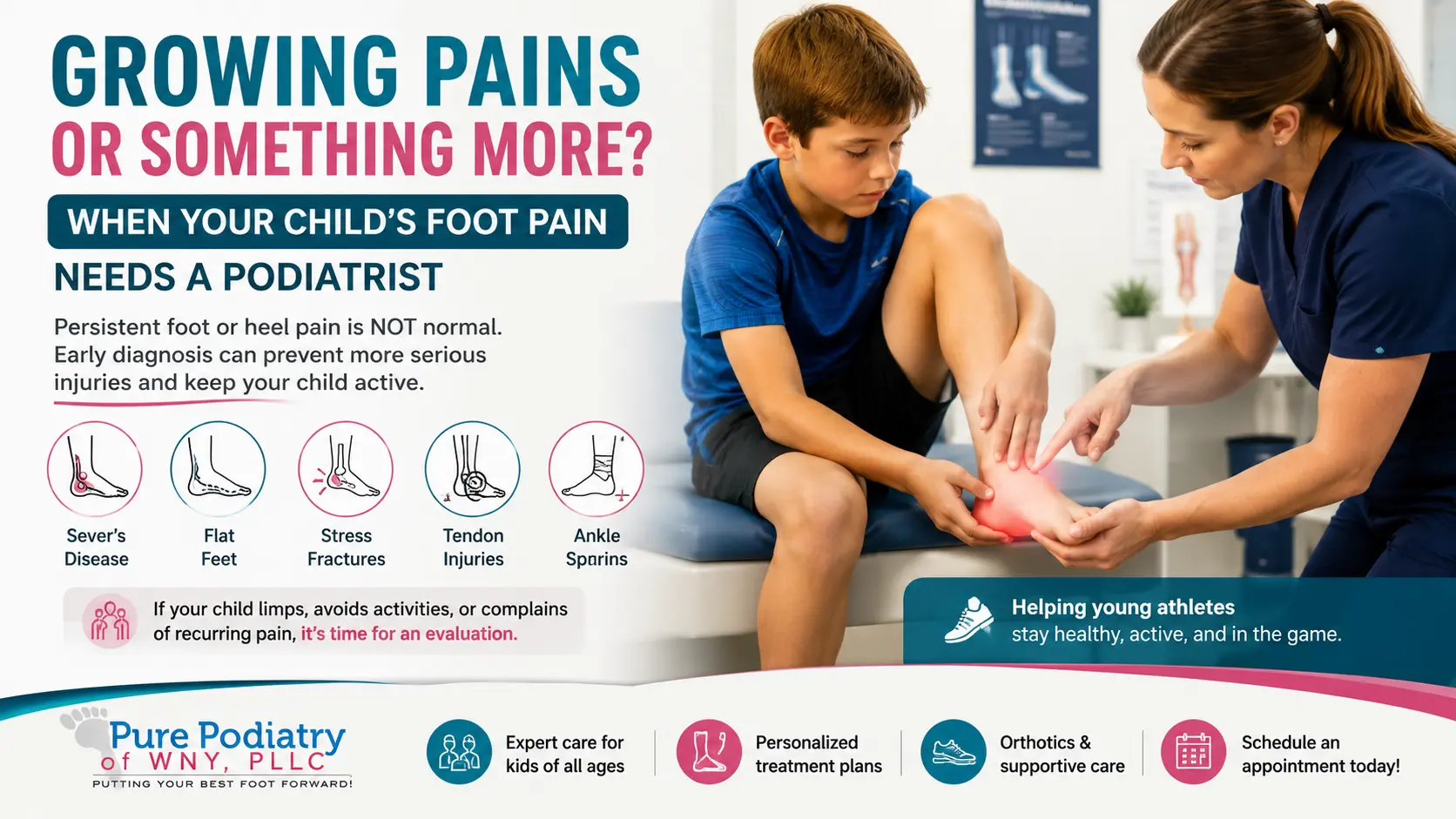
As parents, it’s natural to expect a few bumps and bruises as children grow. Whether they’re running across the soccer field, sprinting down the football field, practicing volleyball serves, or logging miles for cross country, active kids often come home with sore muscles after a long day.
But what happens when your child starts complaining about foot or heel pain?
Many parents assume it’s simply “growing pains” and hope it will disappear with time. While occasional aches can happen during periods of rapid growth, persistent foot pain is not considered a normal part of growing up.
Ignoring those symptoms can allow a minor problem to become a more serious injury, potentially keeping your child out of the sports and activities they love.
At Pure Podiatry of WNY, we help families throughout Western New York determine whether a child’s foot pain is something temporary—or a condition that deserves professional treatment. Understanding the difference can help your child recover faster and avoid long-term problems.
Key Takeaways
- Persistent foot or heel pain is not a normal part of growing up.
- Children involved in sports are especially prone to foot and ankle injuries.
- Conditions like Sever’s disease, stress fractures, flat feet, and tendon injuries are commonly mistaken for growing pains.
- Early diagnosis can shorten recovery time and help prevent more serious injuries.
- If your child limps, avoids activities, or complains of recurring pain, it’s time for an evaluation.
Are Growing Pains Real?
Yes—but they don’t usually affect the feet.
Growing pains typically occur in the muscles rather than the joints or bones. They often affect both legs, usually in the thighs or calves, and tend to occur in the evening or at night after an active day.
Children with growing pains generally wake up feeling better by morning and continue their normal activities without difficulty.
Foot pain is different.
If your child repeatedly complains about pain in one foot, one heel, or one ankle—especially during sports—it usually points to an underlying condition rather than normal growth.
Signs Your Child’s Pain Is More Than Growing Pains
It can be difficult to know when to worry, but certain symptoms should never be ignored.
Your child’s foot pain deserves medical attention if they:
- Limp after sports or physical activity
- Complain of pain in the same spot repeatedly
- Avoid running or playing
- Experience swelling or bruising
- Have pain that continues into the next day
- Wake up because of foot pain
- Stop participating in activities they usually enjoy
These signs often indicate an injury or underlying condition that requires treatment.
Common Causes of Foot Pain in Children
Several conditions commonly affect active children and teenagers.
Sever’s Disease
One of the most common causes of heel pain in children is Sever’s disease, also known as calcaneal apophysitis.
This condition develops when the growth plate at the back of the heel becomes irritated from repetitive stress.
Children between the ages of 8 and 14 are most commonly affected because their bones are growing rapidly while muscles and tendons struggle to keep up.
Sports with lots of running and jumping increase the risk, including:
- Soccer
- Football
- Volleyball
- Basketball
- Cross country
- Cheerleading
Symptoms often include:
- Pain in the back or bottom of the heel
- Limping after activity
- Pain that improves with rest
- Tenderness when squeezing the heel
Although uncomfortable, Sever’s disease responds very well to early treatment.
Flat Feet
Many children naturally have flexible flat feet when they’re young.
In many cases, this isn’t a problem.
However, some children develop pain because their arches collapse excessively while walking or running.
Flat feet may lead to:
- Foot fatigue
- Heel pain
- Arch pain
- Ankle discomfort
- Frequent tripping
- Difficulty keeping up with teammates
If flat feet are causing pain or limiting activity, treatment may include supportive footwear, stretching exercises, or custom orthotics.
Stress Fractures
Stress fractures are tiny cracks in the bone caused by repetitive impact.
Unlike a sudden injury, stress fractures develop gradually over time.
Young athletes involved in running sports are especially vulnerable.
Warning signs include:
- Pain that worsens with activity
- Tenderness over one specific area
- Mild swelling
- Pain that doesn’t improve with rest
Because these injuries often begin subtly, they’re frequently mistaken for growing pains until they become more severe.
Tendonitis
Growing bodies place extra stress on tendons, especially when sports seasons begin.
Overuse of the Achilles tendon or other tendons in the foot can lead to inflammation and pain.
Children may notice:
- Stiffness in the morning
- Pain during running
- Tenderness after practice
- Difficulty jumping or sprinting
Prompt treatment often allows young athletes to return to activity much sooner.
Ankle Sprains
Not every ankle sprain involves dramatic swelling.
Some mild sprains continue to cause discomfort long after the initial injury.
Repeated ankle sprains can eventually lead to chronic instability, making future injuries much more likely.
If your child seems to “roll” the same ankle repeatedly, it’s important to have it evaluated.
Why Children Often Hide Their Pain
Many young athletes don’t want to disappoint their teammates or coaches.
Others worry they’ll lose their starting position or miss an important game.
Instead of speaking up, they simply continue playing through the pain.
Unfortunately, continuing to participate with an untreated injury often leads to longer recovery times.
Encouraging children to report pain early helps protect both their current season and their long-term foot health.
What Happens If You Ignore Foot Pain?
Children are remarkably resilient, but that doesn’t mean injuries heal properly without treatment.
Ignoring persistent pain can lead to:
- More severe injuries
- Longer recovery periods
- Changes in walking or running mechanics
- Increased risk of future injuries
- Missed practices and games
- Chronic foot or ankle problems later in life
Early intervention is almost always easier than treating a condition that has been present for weeks or months.
How a Podiatrist Diagnoses Pediatric Foot Pain
At Pure Podiatry of WNY, every child receives a thorough evaluation designed to identify the true source of their pain.
Your visit may include:
- A detailed medical history
- Discussion of sports and activity levels
- Gait analysis
- Physical examination
- Range of motion testing
- Evaluation of foot structure and alignment
- Diagnostic imaging when necessary
Because many pediatric conditions produce similar symptoms, obtaining the correct diagnosis is one of the most important steps toward recovery.
Treatment Depends on the Cause
There isn’t a one-size-fits-all solution for pediatric foot pain.
Treatment is based on your child’s diagnosis, age, activity level, and athletic goals.
Depending on the condition, treatment may include:
- Activity modification
- Stretching programs
- Physical therapy
- Supportive footwear recommendations
- Custom orthotics
- Bracing
- Ice and anti-inflammatory strategies
- Return-to-play guidance
Our goal is always to relieve pain while helping young athletes return to the activities they love as safely as possible.
Can My Child Keep Playing Sports?
This is one of the first questions parents ask.
The answer depends on the specific injury.
Some conditions can safely be managed while your child continues participating with modifications.
Others require temporary rest to prevent worsening damage.
Returning to sports too early can prolong healing and increase the risk of reinjury.
Your podiatrist will recommend a treatment plan that balances recovery with your child’s desire to stay active.
When Should You Schedule an Appointment?
Don’t wait if your child:
- Has foot or heel pain lasting more than a few days
- Complains of pain after every practice
- Begins limping
- Avoids sports because of discomfort
- Has swelling or bruising
- Experiences recurring ankle sprains
- Has pain that wakes them at night
- Doesn’t improve with rest
Prompt evaluation often leads to quicker treatment and a faster return to normal activities.
Helping Young Athletes Stay Healthy
At Pure Podiatry of WNY, we understand how important sports are for children and their families.
Whether your child is preparing for their first soccer season or competing at a high level, we’re committed to helping them stay healthy, active, and confident.
We provide expert care for:
- Pediatric foot pain
- Heel pain
- Sever’s disease
- Sports injuries
- Flat feet
- Ankle sprains
- Stress fractures
- Tendon injuries
- Custom orthotics
- Pediatric foot evaluations
Parents can also learn more about what causes plantar warts and how to prevent them, another common foot concern among children and active families. Every treatment plan is personalized because every child—and every athlete—is unique.
Don’t Ignore Foot Pain
Your child shouldn’t have to “play through the pain.”
If they’re complaining about sore heels, aching feet, or recurring ankle discomfort, don’t assume they’ll simply outgrow it. Early diagnosis and treatment can help prevent small problems from becoming season-ending injuries.
Active children can encounter other common foot problems outside of sports injuries. Plantar warts, for example, can develop after exposure to HPV in warm, moist environments such as public pools and locker rooms. Parents can learn more about simple ways to prevent plantar warts and protect their children’s feet during the summer months.
At Pure Podiatry of WNY, we’re proud to care for young athletes and active children throughout Western New York. We’ll identify the cause of your child’s foot pain, explain your treatment options, and create a personalized plan to help them get back to doing what they love.
Schedule an appointment today and give your child the expert care they need to stay active, healthy, and ready for the season ahead.