You wake up and your foot hurts.
You walk around for a few minutes, and maybe it gets a little better.
By the end of the workday, it’s bothering you again.
So you change your shoes. Take a break from walking. Skip a workout. Buy an insert. Take an over-the-counter pain reliever. Maybe you search online for stretches that might help.
And eventually, it feels a little better.
Until it comes back.
If this cycle sounds familiar, you’re not alone. One of the easiest things to do with foot pain is learn how to live around it.
But recurring foot pain isn’t something you should automatically accept as a normal part of getting older, being active, standing at work, or wearing the wrong shoes.
When pain keeps returning, there’s usually a reason.
At Pure Podiatry of WNY, our goal is to identify what’s causing your pain so we can help you find an appropriate treatment plan and get back to walking, working, exercising, and doing the things you enjoy more comfortably.
When Is Foot Pain Considered Chronic?
Chronic foot pain generally refers to pain that persists over time or repeatedly returns rather than resolving as expected.
But you don’t need to wait for a specific number of weeks or months before seeing a podiatrist.
If foot pain keeps returning, is getting worse, changes the way you walk, or begins limiting your normal activities, it’s worth having evaluated.
A better question than “Have I had this long enough to see a doctor?” may be:
“Is this foot pain changing the way I live?”
If the answer is yes, it’s time to find out why.
Why Does My Foot Keep Hurting?
Foot pain isn’t a diagnosis.
It’s a symptom.
Your feet contain a complex combination of bones, joints, muscles, tendons, ligaments, nerves, and other structures that work together every time you stand or take a step.
Pain can develop when one or more of those structures becomes irritated, injured, overloaded, or isn’t functioning properly.
The location, timing, and type of pain can provide important clues.
For example:
- Does your heel hurt when you first get out of bed?
- Does the ball of your foot hurt after you’ve been standing?
- Is there pain around your big toe?
- Does your arch ache after walking?
- Does your foot feel stiff?
- Is there burning, tingling, or numbness?
- Does one particular pair of shoes make symptoms worse?
- Does the pain improve and then return as soon as you become active again?
Those details matter because chronic foot pain can have many different causes. In some cases, a painful area on the foot may also involve a skin-related problem rather than a deeper structural issue. For example, learn more about what causes plantar warts and why they develop.
What Are Common Causes of Chronic Foot Pain?
There is no single cause of persistent foot pain. That’s one reason self-diagnosing based solely on where it hurts can be frustrating.
Several conditions may contribute to recurring foot pain.
Plantar Fasciitis and Heel Pain
Pain near the bottom of the heel is one of the most common reasons people seek podiatric care. If you’re experiencing heel pain that keeps coming back, identifying the underlying cause can help determine which treatment options may be appropriate.
Plantar fasciitis involves irritation of the plantar fascia, the band of tissue that runs along the bottom of the foot. The American Academy of Orthopaedic Surgeons provides additional patient information about plantar fasciitis and heel pain.
People often notice heel pain during their first steps after getting out of bed or after periods of rest.
But not every case of heel pain is plantar fasciitis.
If heel pain keeps returning, an evaluation can help determine what is actually causing it.
Bunions
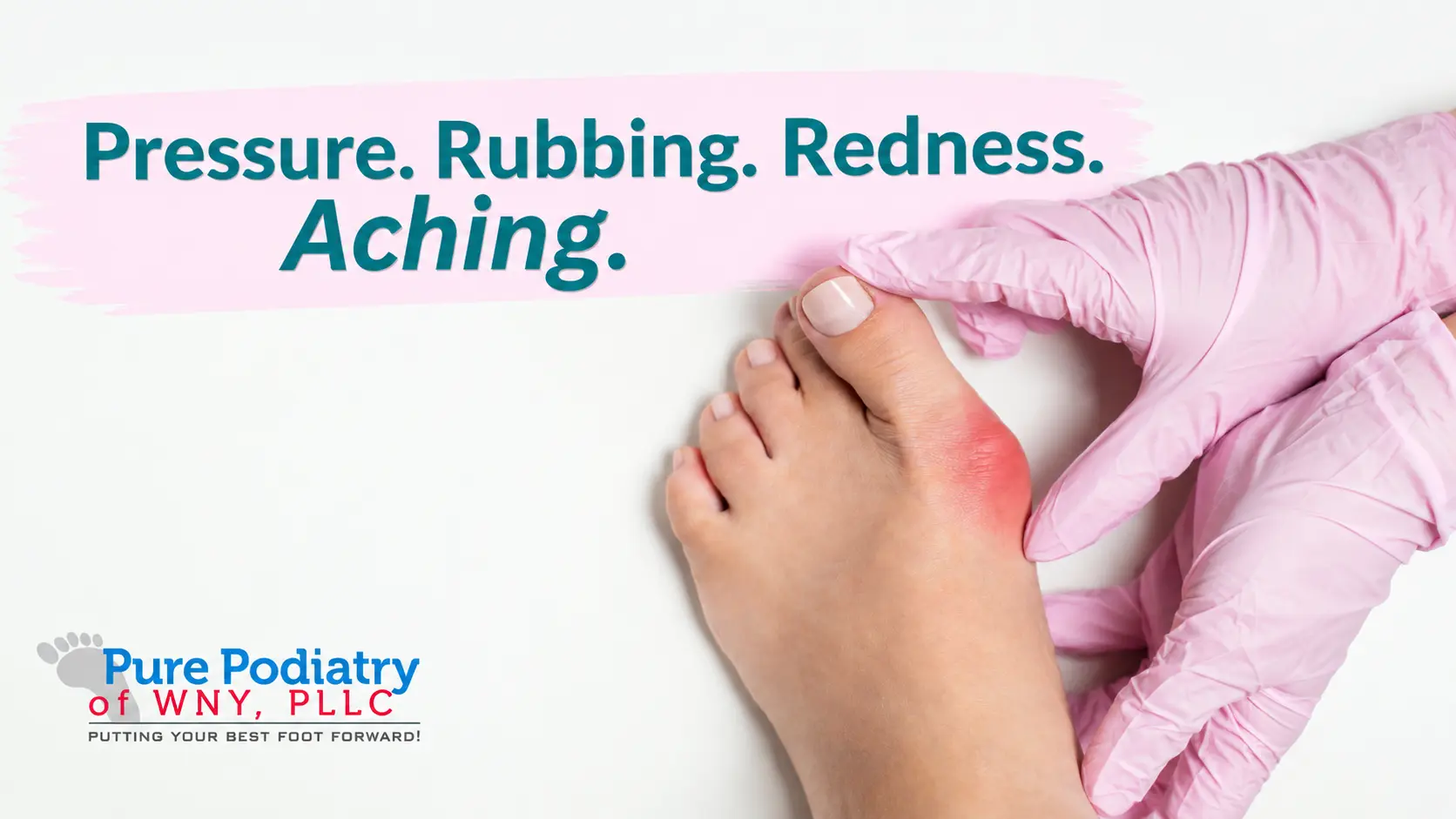
A bunion is a structural deformity involving the joint at the base of the big toe.
As the alignment changes, patients may experience pain, redness, irritation, difficulty wearing shoes, stiffness, or problems with neighboring toes.
Some bunions remain relatively comfortable for years. Others become increasingly painful and begin interfering with walking and footwear. Learn more about the signs a bunion may be getting worse and when it’s time to see a podiatrist.
Arthritis
The foot contains many joints, which means arthritis can affect multiple areas.
Symptoms may include pain, stiffness, swelling, reduced motion, or difficulty walking.
Joint pain that continues or becomes progressively more limiting should be evaluated rather than simply attributed to age.
Tendon Problems
Tendons play a critical role in supporting and moving the foot and ankle.
Overuse, repetitive stress, changes in activity, or injury can contribute to tendon pain.
Depending on the tendon involved, you may experience discomfort around the heel, ankle, arch, or other areas of the foot.
Structural and Biomechanical Problems
Sometimes the issue isn’t simply where it hurts.
It’s how your foot moves.
Foot structure and mechanics can influence how pressure is distributed when you stand and walk. In some cases, this may contribute to recurring pain or make certain areas of the foot work harder than they should.
That’s one reason a podiatric examination looks at more than the painful spot itself.
Is It Normal for Your Feet to Hurt After Walking?
Temporary soreness can occur after an unusually long or demanding day.
But regular foot pain shouldn’t simply be considered the price of walking.
If you’re consistently experiencing pain during or after normal amounts of activity, there may be an underlying reason.
This becomes especially important if you find yourself reducing your activity because of your feet.
Maybe you’ve shortened your walks.
You don’t take the stairs anymore.
You avoid shopping trips.
You skip exercise because you know your feet will hurt afterward.
Or you plan your day around opportunities to sit down.
These changes may seem small individually, but together they can significantly affect your quality of life.
Foot pain can affect people at different activity levels, including children and teens participating in sports. Parents can also learn more about common foot and ankle injuries affecting young athletes.
7 Signs It’s Time to See a Podiatrist for Foot Pain
You don’t need to wait until you can barely walk before scheduling an appointment.
Consider seeing a podiatrist if:
1. Your Foot Pain Keeps Coming Back
Pain that disappears for a few days and repeatedly returns deserves attention. If you’re unsure when recurring discomfort has become serious enough to seek professional care, learn more about when recurring foot pain should be evaluated by a podiatrist.
Temporarily reducing symptoms isn’t necessarily the same as addressing the cause.
2. Your Pain Is Getting Worse
If discomfort is becoming more frequent, more intense, or lasting longer than it used to, don’t continue waiting for it to resolve on its own.
3. You’re Changing the Way You Walk
Limping or shifting your weight to avoid a painful area can change the mechanics of walking.
If you notice yourself compensating for pain, it’s time to find out what’s causing it.
4. Foot Pain Is Limiting Your Activities
This is one of the biggest warning signs.
If you’re avoiding walking, exercise, work activities, hobbies, travel, or social events because of your feet, pain has moved beyond an inconvenience.
5. You’ve Changed Shoes Repeatedly Without Improvement
Good footwear matters.
But shoes can’t solve every foot problem.
If you’ve bought wider shoes, more supportive shoes, new sneakers, inserts, or cushions and you’re still uncomfortable, the answer may not be another trip to the shoe store.
6. Home Treatments Only Help Temporarily
Rest, ice, stretching, or activity changes may improve some types of minor foot discomfort.
But if the pain continually returns as soon as normal activity resumes, you may be managing symptoms without addressing the underlying problem.
7. You Don’t Know Why Your Foot Hurts
You don’t need to diagnose yourself before seeing a podiatrist.
That’s the point of the evaluation.
Instead of cycling through online advice and products, a podiatric examination can help determine which structures are involved and what treatment may actually be appropriate.
Why Does Foot Pain Sometimes Get Worse in the Fall?
Fall can expose foot problems that were easier to ignore during summer.
Schedules change.
People return to regular exercise routines.
School activities begin.
Fall festivals, sporting events, travel, and outdoor activities can mean more time walking and standing.
And in Western New York, sandals quickly give way to sneakers, work shoes, and boots.
If you’ve spent the summer accommodating a painful foot, the combination of increased activity and different footwear may make symptoms much harder to ignore.
That’s what makes September a good time to ask:
Do I really want to spend another fall and winter working around this pain?
What Happens When You See a Podiatrist for Chronic Foot Pain?
A good foot pain evaluation starts with understanding the whole problem, not simply pointing to where it hurts.
Your podiatrist may ask:
- Where is the pain located?
- When did it begin?
- Is it worse in the morning or later in the day?
- Which activities make it worse?
- What shoes do you normally wear?
- Have you experienced swelling, stiffness, numbness, or tingling?
- Have you changed the way you walk?
- What treatments have you already tried?
- What activities has the pain prevented you from doing?
Your foot and ankle can then be evaluated for areas such as motion, structure, alignment, tenderness, and function.
When clinically appropriate, additional testing or imaging may be recommended.
An evaluation with our experienced podiatry team can help you better understand what may be causing your symptoms and which treatment options may be appropriate.
How Is Chronic Foot Pain Treated?
There isn’t one treatment for chronic foot pain because there isn’t one cause.
Treatment should be based on your diagnosis, symptoms, foot structure, activity level, medical history, and goals.
Depending on the condition, treatment recommendations may include changes in footwear, activity modifications, stretching or rehabilitation, orthotics, other conservative therapies, or more advanced treatment when appropriate.
For certain structural problems or conditions that continue despite appropriate conservative treatment, surgery may eventually be discussed.
But seeing a podiatrist does not automatically mean surgery.
It means finding out what is wrong and understanding your options.
Frequently Asked Questions About Chronic Foot Pain
Should I see a podiatrist if my foot pain comes and goes?
Yes, recurring foot pain can still indicate an underlying problem. If symptoms repeatedly return, particularly when you resume normal activity, an evaluation may help identify the cause.
Why does my foot hurt when I walk but not when I rest?
Pain during walking may be associated with increased stress on certain bones, joints, tendons, ligaments, or other structures. Because several conditions can cause activity-related foot pain, an examination is important for an accurate diagnosis.
Can the wrong shoes cause chronic foot pain?
Footwear can contribute to pressure and discomfort, but persistent pain may involve additional factors. If changing shoes hasn’t solved the problem, consider having your feet evaluated.
Should foot pain be expected as you get older?
Foot problems may become more common with age, but persistent pain shouldn’t automatically be dismissed as “just getting older.” Identifying the cause can help determine whether treatment may improve comfort and function.
When should I worry about foot pain?
Seek medical evaluation for pain that persists or repeatedly returns, worsens, affects walking, causes significant swelling or other concerning symptoms, or interferes with normal activities. Sudden severe pain or an acute injury may require more immediate evaluation.
Can chronic foot pain be treated without surgery?
Many causes of foot pain can be treated conservatively. Whether nonsurgical care is appropriate depends on the underlying diagnosis and severity of the problem.
Stop Letting Your Feet Decide What You Can Do
Chronic foot pain often doesn’t take something away from you all at once.
It happens gradually.
You stop taking the long walk.
You choose the closer parking spot.
You skip an activity.
You wear the same two pairs of shoes because they’re the only ones that don’t hurt.
You start saying, “My feet just always hurt.”
Eventually, those adjustments start feeling normal.
They don’t have to be.
At Pure Podiatry of WNY, we want to understand not only where your foot hurts, but what that pain is preventing you from doing.
Because the goal isn’t simply to make your foot feel better for a few days.
It’s to help you move more comfortably and confidently.
Walk Into Fall Comfortably
Fall should mean enjoying cooler weather, getting outside, attending your kids’ activities, taking walks, traveling, and doing the things you love.
Not wondering how much your feet are going to hurt afterward.
If recurring or chronic foot pain is beginning to interfere with your everyday life, now is a good time to get answers.
Schedule an appointment with Pure Podiatry of WNY and take the first step toward understanding what’s causing your foot pain and what you can do about it.